Showing posts with label coating plant. Show all posts

Monday, 14 May 2018

SAFETY IN PRODUCTION PROCESSES AND CARE FOR THE ENVIRONMENT: THESE ARE THE REAL 4.0 INNOVATIONS


The term sustainability, which should have as its primary objective to act in the present with a projected vision to what will be "the productive tomorrow", is increasingly in use in the industrial sector.

It is therefore essential to think about the medium and long term and give the word sustainability two different meanings: a broader one, which includes social development, as well as economic and ecological, and a narrower one, which instead refers almost exclusively to the aspects of environmental management and resources, which are feared to be exhausted over time. Sustainability rhymes with responsibility and not only by assonance.

In fact, the conceptual “company that keeps its priorities straight” is one of the most recent topics on management and corporate policy. The business model of the company, traditionally structured to handle a small universe of known and "safe" issues, is now facing a much broader and more diversified scenario, where everything is faster, where reputation and credibility are influenced by variables often independent of the mere production mechanism. What matters then is to have an inclusive overview and a perception aligned to the global market.

Despite strong competition and a major problem of counterfeiting, Italy covers over 50% of European production and over 15% of global production (source: Unic, Unione Nazionale Industria Conciaria). The entire local manufacturing system is strongly influenced by territoriality, which represents adds to its credibility and represents a high added value of Made in Italy, thanks to a strongly ”artisanal" tradition.

However, this should not lead us to underestimate the necessities and perception of a global market that seeks quality, competitiveness but also products that are safe and environment-friendly. This brings eco-friendliness to become an important factor of competitiveness, a further immaterial added value for the Italian industry.

Technological innovation linked to topics such as environment and safety is, in fact, a reasonable goal for responsible entrepreneurship and is an element that contributes to the perception of quality that is usually associated with Italian manufacturing productions. However, while it is true that environmental sensitivity begins to spread among some consumer groups, it is equally true that much remains to be done so that "green" investments translate into an economic return on the market and an effective competitive asset for companies in the sector. In the last two decades, even under the pressure of increasingly stringent regulations, the coating sector, for example, has invested in various initiatives aimed at reducing the impact on the environment.

Aircom, an Italian company specialized in the design and production of automatic spray guns for the leather, plastic, wood and glass industries, has long since understood this, investing its resources on design, research and development, the fundamentals for the production of pieces not only evolved and aesthetically beautiful, but safe and durable.

Nothing represents this line of thought better than the latest addition to their catalogue, Aircom Eco, a spray gun designed to meet two fundamental objectives: attention to the ecological factor of industrial processes and their environmental impact and consequent, important, cost reduction during the painting phase.

To achieve this,the product has been developed in order to allow processing at very low atomization pressures in order to obtain both a high saving of coating products and a significant reduction in atmospheric emissions (value certified according to UNI EN 13 966-1).

Aircom is synonymous with reliability and safety, thanks to the values that have always distinguished the company and which translate into a dynamic production, in commercial offers never standardized but calibrated on the needs of individual customers and in a maximum level of guarantee for the final customer, proven by the most important certifications in terms of efficiency and transfer.

Tuesday, 24 April 2018

“POWDER AREA “COLOUR CHANGE IN 90 SECONDS, IN COATING BOOTH IN 3-5 MINUTES : A 4.0 REVOLUTION


When you visit Euroverniciatura plant, you can immediately notice a technical-cultural growth of this subcontracting company.
This growth is undoubtedly due to the company entrepreneurs’will (Pietro Cersosimo and Chiara Guarda),who are focused on many factors, in particular on investements for innovative equipment- such as powder coating booth- cutting-edge plants and nanotechnology-based chemical process.
The company continuously integrates the innovations that gradually are industrialized in the market ( it integrated nanotechnologies into the pre-treatment tunnel, applied by spraying): currently a revolutionary equipment for color change by Siver Nordson has been installed .
It is a simple process ( real innovations are simple to use but are the result of in-depth studies and research, before being developed and industrialized), and that we describe below.
Euroverniciatura coating is very efficient, starting from the pre-treatment and the innovations introduced in the powder coatings booth, which, by itself, has undoubtedly raised the technical level of the company.

THE PLANT
With this plant the coating cycle is complete, by assuring a high quality level, starting from- after the items’loading on the conveyor- the surface preparation with appropriate nanotechnology-based pre-treatement,up to the application of powder coatings finish in various colours /per day.
Our investements’ goal – tell us Pietro Cersosimo- is competitivity .Our offer, for Italian and European customers, has a high quality level and fast delivery,according to cycles, colours, and items’customisation.
The color change,its speed, is a strategic competitive factor.
For this reason we choose the innovative “powder area” by Siver Nordson, that in 90 seconds allows the colour change -underlines Pietro Cersosimo -a real “revolution” we have been waiting for long.

 “POWDER AREA”
After the nanotechnology-based pre-treatment spraying and subsequent drying, the items reach the large powder coatings booth , equipped with a so called “powder area”, to distinguish it from the traditional “powder centre” that takes from 3 to 5 minute for the colour change (5 minutes from dark colour to light ones).

“Powder area”,consists of Top Color Change HD Dual, by Siver Nordson,equipped with two independent boxes of fluidified powder coatings. With this configuration, during the coating phase, a box feed the spray-guns while the other one is ready to apply the next colour.
During the change colour phase the system goes from a box to the other in less than 90 seconds, by cleaning simultaneously powder coatings tubes and all spray- guns used.
The system manages automatically the distributor tubes in a very precise way allowing to rightly positioning themselves.The operator must only follows the simple instructions on the HMI screen.
After the colour change, the coating cycles restarts with the new colour,an automated process allows the unloading and the cleaning of the box used before so it is ready for a new colour.
A curing oven and the loading/unloading items area integrate the large coating plant.

CONCLUSIONS
 “We invite you so that the readers of Verniciatura Industriale could know all the innovations which currently could improve powder coating process” ends Pietro Cersosimo.
By replacing the traditional “Powder Centre” with Top Color Change HD Dual we improved on line productivity and we fully automated a phase very unpleasant for plant’s operator.
All cycle times are optimised as in our painting line where we mainly paint trucks’chassis.
We are very satisfied- ended Pietro Cersosimo:actually our offer is more competitive, also in terms of delivery time.
A great effort by our company , but the results obtained are excellent.


SOLVENTS ABATEMENT IN SPRAYING BOOTHS AND CURING OVENS FOR PAINTS TO FINISH PLASTIC ITEMS


Coaters of manufactured plastic items must comply always stricter laws about solvent emission reduction, and they are very worried about investment cost necessary to purchase after burners available on the market (nowadays called thermal oxidisers). They must consider also to spend more resources to incinerate solvents as eventual downtimes (or in case of low concentration of emitted solvents) it is compulsory to fuel the thermal oxidiser with methane gas in order to keep temperature since Vocs coming from the booth are very low.
Came (Bussero, Milano, Italia), a company specialised in plants for solvents abatement through self-generating actived carbons, through an innovate technology developed by Ezio Crespi, the main expert in this sector. 
HT company (Cherasco, Cuneo, Italia) installed this kind of plant to abate solvents: in the area where the company operates the emission limit is 50 mg Nm3/h, the plant does not emit more than 5 mg/h (it treats 40.000 Nm3/h of polluted air coming from the booth and the curing oven)
The cost investment is less than 50% compared to a traditional thermal treatment system, and the management costs are between 50 and 100 euro monthly.
The enterprise coats plastic components for the Italian automotive industry. 
The VOC treatment plant through activated carbons is very simple ant very smart at the same time:
-          The fumes emitted by the booth and the oven (the plant treats 40.000 Nm3/h of polluted prior to filtration) are canalised to the plant
-          Vocs are absorbed by activated carbons that once saturated, are regenerated with stream vapours obtained from stripped solvents combustion.


CONCLUSIONS

The solvents abatement of the coating plants, for those who are forced to use solvent-based coatings is not a productive step but compulsory to comply polluting emissions with parameters prescribed by law. 
So those who coat must evaluate the abatement plant operational capacity; to reduce to minimum the investment cost and the operational cost: plant developed by Crespi and manufactured by CAME is a really efficient solution.

Waterborne coatings: why are they seldom used even if the final consumer and law are against solvents?


Gianni Giardina interview: a plant that has grown an experience of more than 45 years in wood coating industry up.

PM- In the last ten-year period you could chase the initiation of thousands of plants that used water-based coatings.  Which would the main purpouses that facilitated that installations? Today can these motivations be valid for proposing again the use of these paints?
GG- In the next century, the heavy expansion and industrialization in wooden industry, guided to an overstated purpose of solvent-based coatings, damages to the environment and people that worked in factories.  Even the final purchasers of coated manufacts were subjected to indirect consequences. For many years thay have breathed the solvents’ vapors that came from the surfaces of the furniture bought many time before.  For different reasons, everyone wanted to eliminate solvents, and yet the change started just with the beginning of the new year.

PM- What has the change prevented?
GG: The three main characters of this sector, coatings plants and coaters, should have cooperated. At the end of the last century, the waterborne paints were unsaleable because:
1) They costed much more than the solvent ones. The lacking used quantity didn’t allow an economy of scale in research and production;
2) The technicians couldn’t guarantee a repetitive drying. For example it was very difficult to apply the spray paints, to have regularity in each part of the coated batch and, as a consequence, to provide the right quantity with the wet features necessary to paint strip water in film coating. The accidental variation of one of these parametres meant that it couldn’t be possibile to pile the batches at the end of the coating line. So painters weren’t willing to have an uncertain result and to spend more in production costs.

PM – Starting from the 19th century something has changed the scenery so much that thounsands of users successfully installed water plants in the first 5-6 years. What’s happened?  
GG: During the 1999, a young Friulian engeneer who worked in a regional research center, accidentally changing some wavelenghts, identified some anomalies on the samples.  Through common knowledges he put them through me. This made me build a prototype and, thanks to others consolidated technologies, I could develop a deliver coating water system, without heating the batch and using the air of the environment for the exsiccation.  
With the new technology we called different clients interested in water-based coatings and so we successfully sold and installed the first microwave technology plants.

PM – So were coatings already ready?
GG: Not yet, but by removinq the exsiccation air, the users started working and producing with water-based paints. In the mean time, in the six months between the acceptance of the client, the installation and the final delivery, the technicians could create coatings with the quality requested by the consumer.   Counting on sure consumption and a huge potential market, the coatings producers throw themselves in the research, succeeding in reducing prices and giving to the water-based coatings the same features of the solvent-based ones. 

PM- What did you do to fight the scepticism around water-based products?
GG- We work a lot with marketing. For each new functional plant, we realized an interview to the client, photos and videos. All the multimedial material was sent by email to hundreds of potential clients and posted on the website. So anyone could call into question the words of a client that was satisfied by its painted production with water-based coatings while it was piled at the exit of the oven. This had the effect to put an increasingly attention to the waterborne paints and the new plants.
In the mean time others technologies such as IR and vertical ovens could have been successfully proposed by other technicians. In just a few years hundreds of plants have been realized for furniture, kitchens, doors and windows, contours, chairs, coffers and so on. 

PM- What’s happened then? Why did statistics tell us that the water-based products consumption is decreasing?
GG:- First let’s specify that the purpose of water-based paints on wooden doors and windows could never change. The furniture is a different story.
Thanks to the general crisis developed all over the world, the furniture sector have seen both the crisis of the water- based products and of all the application systems projected for big ranges of batches. The companies, in order to sale and please their clients, accepted also little orders using plants projected for large volumes of batches. Anyone was ready to work waterborne little batches, so they hand painted in booths or relied on third party that worked in booth too.
Working in coathing booths without the right equipment meant to entrust to the weather conditions for the exsiccation and this is really dangerous. We must add that, when you apply the coating above both the surfaces and sides of a patch, it’s important to do it with the same paint in favour of the final quality.
There’s a waiting time in vaporizing all of the sides of the patches. It could be a long wait if you use water-based products without the right plant, so the pot life will surely be already expired and so you must throw away the coating and make a new one. The new paint could not have the same shades of the first one.  In conclusion: the coater choose much more safe and rapid solvent-based paints, fast drying on a carriage, even without adequate plant.

PM- So how do you get out of it? Do we have to wait for the end of the crisis to not pollute by using industrial plants?
GG:- Not necessary, exsiccation water-based paints safe systems exist for single carriages. These systems exsiccate little batches in few time to turn patches by using the same coating above all the sides.  I built about ten for clients that already worked with little batches. In Italy there are about three technicians that produce them.  They are small low cost plants. 

PM- Ikea is an example of how we can create a market on sustainability and convince the consumer that we can and must produce respecting the environment with suitable materials, including paints. This philosophy has become their commercial strength. The "People & Planet" program foresees that by 2020 it will be 100% eco-sustainable. The tendency of the legislator seems to want to limit more and more all the products considered dangerous for human health, such as formaldehyde, heavy metals, solvents, and CO2 emissions. How can painters follow this "Ikea trend" and respect the laws?
GG- Ikea philosophy is irreversible, scaled-world. You can try to fight just on some segments of the market, even if today the alternatives could always be found.  Some years ago Ikea was known as a producer of economic and unreliable furniture. Time after time it invested in quality and marketing. It made the world understand that the beauty and the bad are individual, because they have to satisfy the likings of all the world but quality, price and reliability are general such as the environment respect.
The furniture maker that wants to follow Ikea or similar companies, naturally for a different clients range, can do it by investing in design without giving quality, reliability and environment respect up. He would be defeated before to start fighting. 

PM- In summary, what should we do?
GG- With the crisis the furniture makers had rightly to adjust their general costs to the sales volume. Now they have to adapt the plants to the new productive needs. We talk about flexible plants, that accepted one batch, automated and that use unpolluted paints. The tecnichians could be the main characters in this adaptation. Then everything must be given to marketing and communication.  
Only with these purposes they could enter the increasingly aggressive market. 

Designing green paint together: one block at a time


A master craftsperson is striving hard to create a beautiful, practical and ethical product: one piece at a time. Chances are, this scene sounds familiar. Perhaps the description fits someone you know; maybe even yourself. But it also fits a completely different type of craftsman: one who wears a white coat instead of a regular jacket; and who works in a lab instead of a studio or workshop.

At DSM, our scientists don’t make furniture and they don’t build houses. But like most designers we know, they are optimists – imagineers who spend their lives wondering ‘what if’; continually reframing challenges and reiterating their work in pursuit of the next big breakthrough. Sometimes, a ‘what if’ evolves into a ‘why not?’ And occasionally…it becomes a reality. One such example is Decovery®: a family of paint resins from DSM that bind the product’s ingredients together and essentially represent the heart & soul of the paint. Most importantly, Decovery® is made primarily from plants.

The path to plant-based paint
That’s right. We can now design paint from plants, seeds and leaves in much the same way that today’s design industry creates products from natural, sustainable materials. What’s more we can achieve this while delivering the very finest of finishes.

It’s this ability of Decovery® to benefit planet and performance that we believe represents the next big breakthrough in sustainable paint – based on principles that will be familiar to many of you in the design industry. In fact the concept behind the plant-based building blocks that we use to create Decovery® resins are remarkably similar to those that designers, builders and architects use. The only difference? Our scientists are fitting their block together on a far smaller scale (think seven times thinner than a human hair), and instead of being made from bricks or concrete, our blocks come from plant residue.

Specifically, we extract the sugars, starches and natural oils from trees and agricultural waste through process known as biomass conversion to create our building blocks – which are completely free of fossil-based materials. So for our planet, the benefits are clear: a reduced carbon footprint, which in turn helps us tackle climate change. While for people - and more specifically your customers - plant-based paint means the ability to breathe fresh, clean air free from solvent fumes.

Want a sustainable alternative? Just ask!
But before getting too pleased with ourselves, we’re the first to admit there remains a long road ahead. To put that into perspective, today Decovery® resins are up to 50% plant based, so we’re only halfway to creating completely natural paint resin; and it’s here where our counterparts in the design industry can really help. To make our dream a reality we need everyone who uses paint – from designers to manufacturers to painters themselves and everyone in between, to come together to fuel this movement towards a 100 % plant-based finish.

The good news? We’re making progress. For example, our team recently spoke to a door manufacturer about using more sustainable paints. His honest reply was that he’d never thought too much about it - although he was willing to listen. When we explained the sustainable concept behind Decovery® - and how it delivers a win-win-win that benefits planet and performance – he was convinced. Now our team is working with this designer to develop a new, more sustainable paint. So if you’re interested in doing the same why not get vocal – and ask your regular supplier for some sustainable alternatives?

You may well discover that the coating on your product really does start to become…the icing on the cake.

Wednesday, 28 March 2018

Diversification and research for the construction of customized turnkey wooden structures


"Every single element is perfectly connected to the others, every need has a specific, precise solution".This is one of the maxims with which Legnostrutture of Villacidro, in the province of Cagliari defines his own activity. This is exactly what is perceived within the company, which is specialized in the construction of laminated wood structures, from the simplest piece to the most complex and committed to respond to the most varied technical requirements. and aesthetics.

 The factory was born in 2009 with the goal of proposing itself on the local market as a partner for the companies, differentiating immediately various aspects of their work compared to those of traditional carpentries and without seeking direct competition with them.

The other distinctive and fundamental feature of the company is surface treatment. Today Legnostrutture is able to offer a customized finished product, having a wide range of colors and effects developed over time to fall back on, also thanks to the collaboration with HDG .

As in many other companies, white wood impregnation presented some inconvenient problems, including yellowing. "Together with HDG we have succeeded in devising a product that solves this problem - Marco Murgia explains - and, from that moment on, we have had a substantial growth in the demand for white coatings".

Due to the excellent result, Legnostrutture and HDG have continued research on white coatings by studying the automatic application, another delicate point.  
"Another difficulty related to white coatings was precisely the application of this product with the impregnation machine - Enrico Bacchini continues -: risk of non-uniform penetration and requirement for manual processing (and therefore of an enormous work force). Together with Marco we have conducted a careful study aimed at enhancing the performance of the product, making it suitable for automatic application. We then followed the same path for other special and exclusive effects".

IN PRODUCTION

The material that arrives in the company is deposited in the warehouse and divided into lots, so as to maintain traceability. The cutting with numerically controlled machines is the first phase of the production process. Once cut, the material passes to the brushing cycle, or directly to the impregnation zone. In the presence of particular structural elements (knee beams, trusses and other), the piece goes through an intermediate phase of assembly.  
The application of the moietta is an essential step, because it allows to unequivocally identify the lot, which is finally placed at the exit.

CONCLUSION

"We attempt to provide our customers with an impeccable service," concludes Marco Murgia, "Making sure they receive the collaboration and technical support that are necessary to better carry out their projects. We focus a lot on technologies, innovation and product customization. And this also thanks to our partner, as well as supplier, HDG."

Friday, 23 March 2018

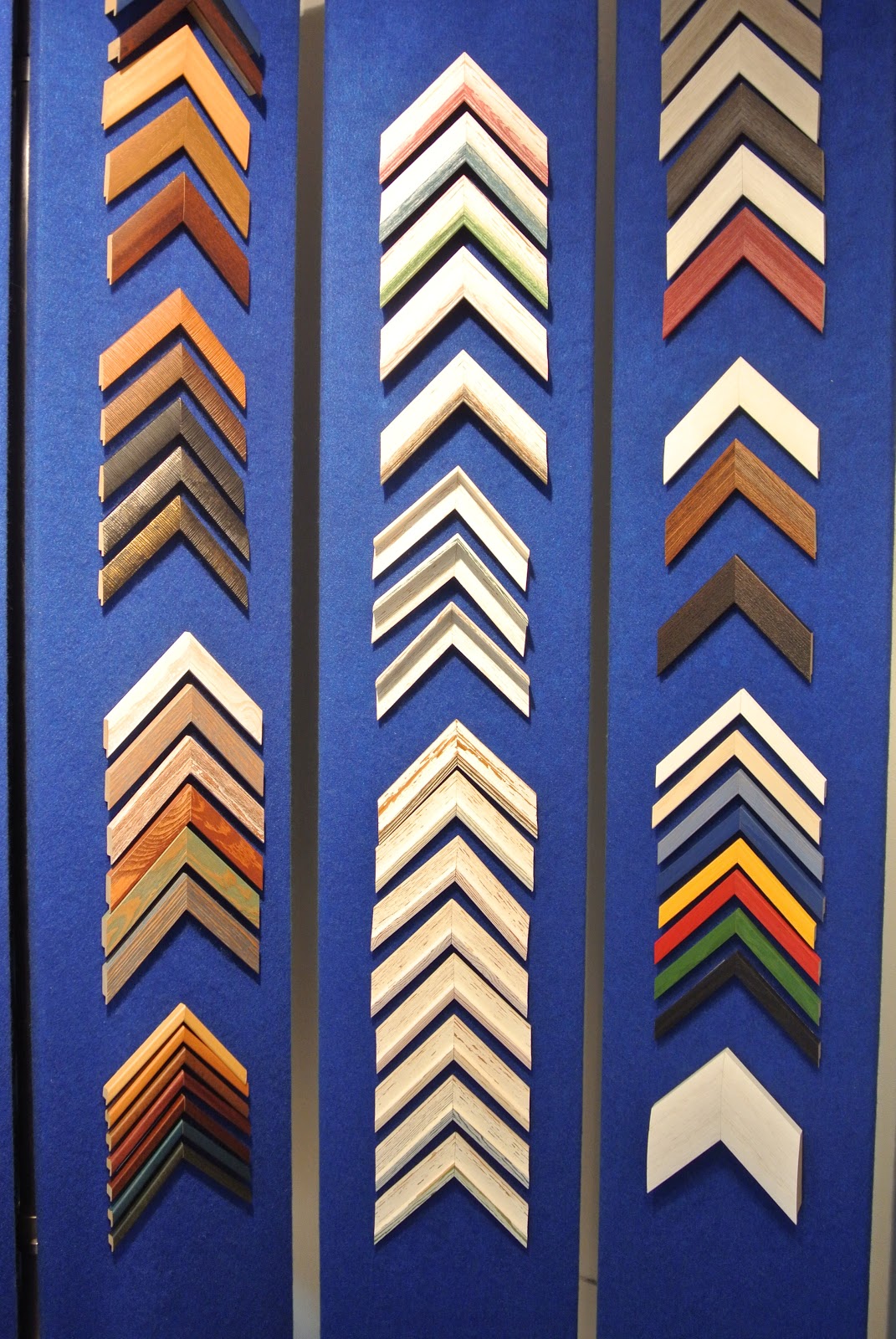
Customization and versatility in the frame industry: the Cornici Incom case.


Cornici Incom of Vicopisano in the province of Pisa has been producing and selling frames since 1975, in Italy and abroad. The entrepreneurial ability of the owners has immediately set production according to industrial criteria, automating it and constantly updating itself on the best technologies available on the market. Today the company is a reference point, on a local and regional level, for the industry.

Quality and attention for the customer and the supplier, these are the strengths of the company, as illustrated by Matteo Morganti, the Incom's head of production, and confirmed by Davide Cioni, head of the Tuscan store Nuova Sivam.

PRODUCTION AND COATING

The raw material arrives already skewed in the company: it’s mostly pine, fir and ayous wood, coming exclusively from Italian territory (the company is FSC certified) and is placed in the warehouse. Once received, the order is processed according to a processing card that is inserted inside a "production box" in which all the available samples are available that the operator has available to develop the correct cycle.

The production department, which is spread over 5,000 square meters, is completely automated and consists of: hot stamping, two coating lines and two for the division of the rods, hot gilding  and packaging. The rod is first inserted into the molding machine equipped with rollers that are heated and give the shape that the frame must have. 

Once printed, the rod is loaded onto the conveyor belt of the painting lines, which conveys it to the sanding and application phases of the base. After 24 hours of drying, the final layers of coating are applied to the material with the same machine. The standard coating cycle consists of four total hands. Depending on the requests, the rods are then divided by special machinery, hot-gilded automatically or embellished by hand. The supply chain closes with packaging, which is also automated, and includes the boxing.

CONCLUSION


"Thanks to the special effects that we are able to achieve thanks to Nuova Sivam paints - concludes Matteo Morganti - and thanks to the excellent raw material we work, we are also able to include the foreign market among our customers: Europe, Central Asia, Russia and the United States, countries that recognize and appreciate Italian excellence. The handcrafted finishing is another element that identifies the originality and the utmost attention to detail of our work. Thanks to our industrial nature, we are able to be competitive, combining rapid production times and personalization of the single order, also thanks to the collaboration with Nuova Sivam".

Thursday, 22 March 2018

The work quality of on-contract coaters is steadily rising


Working with the goal to always keep in check certain parameters, which allow for controlled reproducibility of quality products: this is how work is done at CFN Verniciature, in Pieve d'Alpago, in the province of Belluno: CFN Verniciature is a company specialized in the coating of wood, glass and metal products, methacrylate, polyurethane and other plastics. A third-party coating company that went through a complete renovation and is now able to follow the trends of some sectors, such as furniture, doors, as contract jobs where the use of variable materials is a consolidated trend.

The latest acquisition is an automated polishing machine, bought in late 2017, that Nello Fullin, the owner of the company,  has organized to offer customers a complete coating processing service starting from the raw surface to the finishing, for instance from the sanding and preparation of the material to the coating and other services (such as assembly and preparation of materials for shipments ). 

- Our career brought us to becoming professionals in the furniture sector thanks to our 30 years of activity, as we have the opportunity to offer, in addition to the certainty of delivering a quality product, the technical expertise to accompany the customer in choosing the right cycle of treatments and finishes. Our added value is given by our flexibility, by the punctuality of delivery and by the great range of processes we can offer. -

THE FINISHES

The coating cycles CFN Verniciature carries out satisfy the most varied requests:

     polished and opaque laquer;
     opaque open-and closed pore wood laquer;
     polished and opaque metallic finishing;
     Mother-of-pearl and iridescent finish;
     textured finish;
     Soft feel;

One of the venetian company’s specialties is the glossy brushed paraffinized polyester lacquer, both pigmented and transparent, which is a finish that requires a specialization that is becoming rare these days.

This variety of available cycles brought Fullin to equip itself with a tintometer a few years ago, in order to offer a quick and wide variety of colors, as well as samples with all RAL and NCS colors. A truly flexible service adapted to today's production diversification!


Wednesday, 21 December 2016

Competence and organization for an efficient and quality powder coating service


Competence and organization are two rewarding factors for 
third parties’ painters: we discussed about it with  
Marco Borgolotto, manager at Colorema, a company with two 
locations, the headquarters in Canzo (province of Como), 
and the “branch” in Calco (province of Lecco), within the 
client company of which is a service provider.

“Our company is an historic company of Como’s area: 
steadily growing, the relocation was a challenge that we
have taken thanks to the trust of our customer, who as the 
production site in Calco, which required a quality service 
tailored to the company's production times. The decision 
to install a new plant comes from the fact that we have 
seen increasing the number of trips from Calco to Canzo 
and vice versa, a problem that over time had become 
unmanageable and economically unsustainable. 
Thanks to the valuable advice of Pier Luigi Vertova, 
Ripol’s local agent, the one who provides us with powder 
coatings, we built the new production center and at the 
same time we have implemented the branch’s plant in Cantù 
in order to maintain our painted product’s quality”.
 
The "delocalized" expansion is very interesting: the client company, Satech Safety Technology, that operates in security arrangements for plants, decided to delegate all the finishing process to a subcontractor located in the same production area: flexibility, production time’s adaptation, constant control, logistics efficiency and competence are the reasons for this choice. Forms of close cooperation between customer and contractor as this one are not unusual: for example, it is quite common in overall automotive industry’s context (see VI 524/2011), less common in other sectors.