Tuesday, 24 April 2018

Sirca goes green


Thinking about the future by living the present. This is the philosophy that motivates everyone who believes in a better world. This is the definition of resilience, the people capacity to change their style of life to solve the problems. Never as now we are witnesses of lots of weather, environmental and energetic crisis.
We need concrete actions. Today it’s important to do what’s right.
The weather changes represent an urgent and irreversible threat for humans and the planet. The consumers has new moral values such as the environment respect, the decrease in energy needs and in the consumption of no-renewable energies with the consequent decrease of emissions of gas in the atmosphere. This new awareness of the consumers provided the change need.

The climate change is not just an environmental problem, it’s a health threat, because in a warmer world the infectious deseases easily spread. It endangers the food production, making the soils dry and not good for the nourishment production or the pasturage.
It damages the soil itself by flows produced by the increasing level of seas caused by the fusion of the polar caps. Our destiny is inexstricably linked with the one of all the species and ecosystems of the planet.

It has never happened such a high concentration of CO2.  If it smells we would understand the real danger. In May 2017 CO2 reached the highest monthly levels ever, as it shows by the underlying chart National Oceanic and Atmospheric Administration statunitense (Noaa).

Today both consumers and companies perceive the necessity to enter in this new socio-economical directive. The main principles are energetic efficiency, low carboon footprint, high- tech content in production and products, the use of renewable and sustainable resources, optimization in the use of raw materials and responsible use of products made by raw materials derived from renewable sources.
During its consumption it goes not only from cradle-to-grave, but from cradle to cradle that includes its rycicle.
To ricycle the garbage means to give a value to the garbage itself, by recovering raw materials useful for the production of new materials.

The wooden furniture, coatings and raw materials for the paint industry sectors move fastly to this direction.
The furniture producers and its suppliers strive to have a much more sustainable production. To reduce carboon footprint they use specific coating materials and products with a low environmental impact effect (such as waterborne products). They allow to have a more healthy workplace and to considerably improve the quality of own domestic indoor environment.

Sirca has always believed responsibly in these values and put attention to these topics. In the last ten years it took a green route to strongly reduce its own products’ carboon footprint, by investing time and resources in reasearching and developing ecofriendly and sustainable products, anticipating times and showing a strong environmental ethos. You could not recycle a coater but you can produce one made of bio-polymers produced with bio-monomers derived from food industry wastes.  

Technical solutions S-Cover by Sirca

The forefather of this family has been OW120 and its own catalyst CWN3IO, bicomponent waterborne primer, presented in April 2017, at the European Coating Show.

A bath furniture has been made and exposed in Nuremberg during the ECS, painted with open-pore coating that guarantee a natural effect. The main goal was to demonstrate that you can reduce the use of fossils without losing quality, performances and style, by creating an added value for the consumer, another step ahead for a more sustainable life.

The choosen product, used as a typical water-based bicomponent product, stands out for its 75% renewable content in the A part and 55% in the B part. 

Since that moment R&D Laboratory of Sirca has completed the technical solution available to satisfy the interior furniture market, adding matt lacquered finishes, one-piece and two-component, and textured, of the desired final color. Further completion is given by a trasparent primer specific for parquet, that bind high estetical qualities with elevated performances and best chemical and physical resistance.

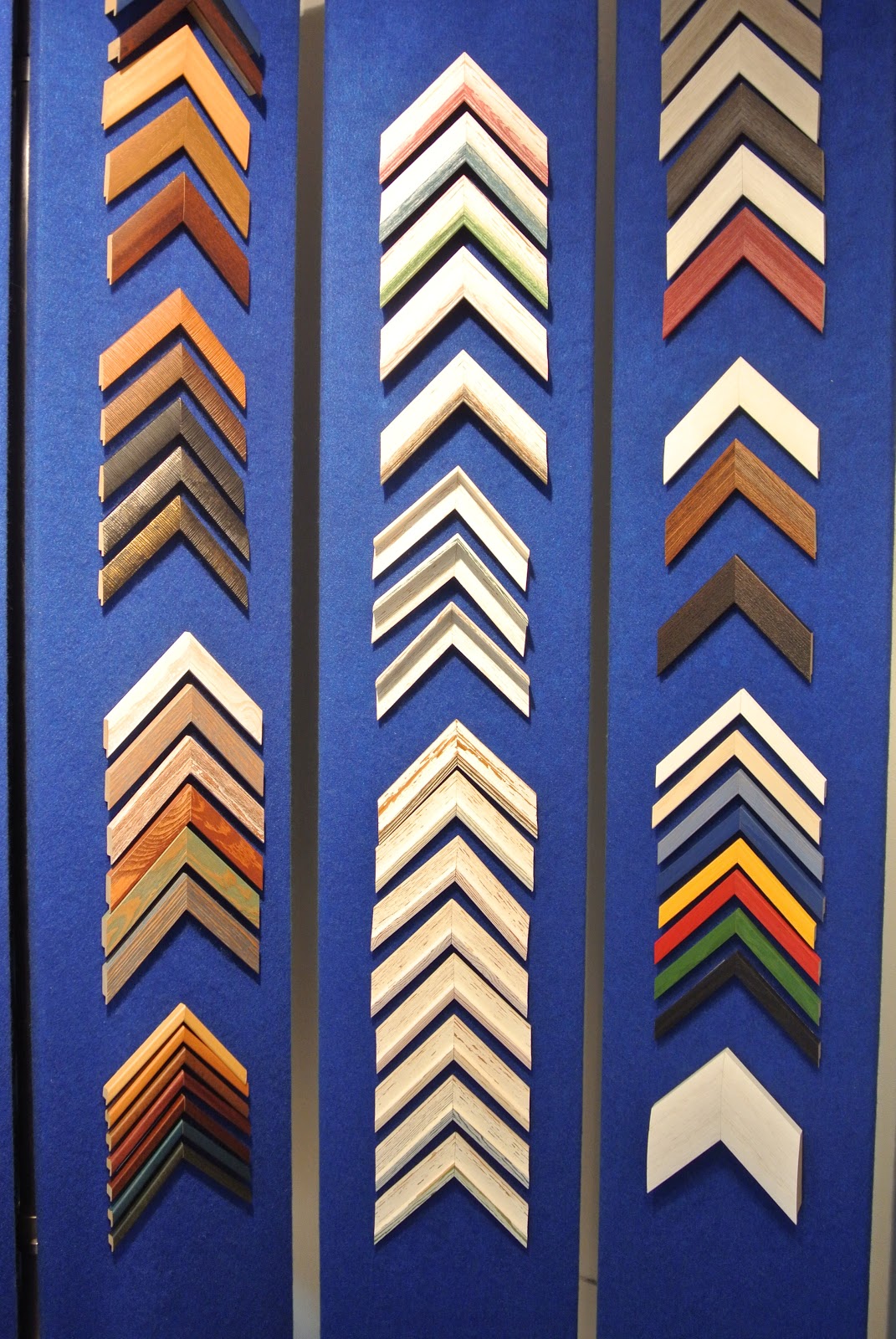
The same attention and commitment have been dedicated to the frames sector, by developing high quality products and outstanding yellowing resistances and to the atmospheric agents, both transparent and laquered.

Sirca can praise a complete range, unique in the wood coating industry, technical ecofriendly and sustainable tecniques that could embrace every type of producers and final users need.  


Designing green paint together: one block at a time


A master craftsperson is striving hard to create a beautiful, practical and ethical product: one piece at a time. Chances are, this scene sounds familiar. Perhaps the description fits someone you know; maybe even yourself. But it also fits a completely different type of craftsman: one who wears a white coat instead of a regular jacket; and who works in a lab instead of a studio or workshop.

At DSM, our scientists don’t make furniture and they don’t build houses. But like most designers we know, they are optimists – imagineers who spend their lives wondering ‘what if’; continually reframing challenges and reiterating their work in pursuit of the next big breakthrough. Sometimes, a ‘what if’ evolves into a ‘why not?’ And occasionally…it becomes a reality. One such example is Decovery®: a family of paint resins from DSM that bind the product’s ingredients together and essentially represent the heart & soul of the paint. Most importantly, Decovery® is made primarily from plants.

The path to plant-based paint
That’s right. We can now design paint from plants, seeds and leaves in much the same way that today’s design industry creates products from natural, sustainable materials. What’s more we can achieve this while delivering the very finest of finishes.

It’s this ability of Decovery® to benefit planet and performance that we believe represents the next big breakthrough in sustainable paint – based on principles that will be familiar to many of you in the design industry. In fact the concept behind the plant-based building blocks that we use to create Decovery® resins are remarkably similar to those that designers, builders and architects use. The only difference? Our scientists are fitting their block together on a far smaller scale (think seven times thinner than a human hair), and instead of being made from bricks or concrete, our blocks come from plant residue.

Specifically, we extract the sugars, starches and natural oils from trees and agricultural waste through process known as biomass conversion to create our building blocks – which are completely free of fossil-based materials. So for our planet, the benefits are clear: a reduced carbon footprint, which in turn helps us tackle climate change. While for people - and more specifically your customers - plant-based paint means the ability to breathe fresh, clean air free from solvent fumes.

Want a sustainable alternative? Just ask!
But before getting too pleased with ourselves, we’re the first to admit there remains a long road ahead. To put that into perspective, today Decovery® resins are up to 50% plant based, so we’re only halfway to creating completely natural paint resin; and it’s here where our counterparts in the design industry can really help. To make our dream a reality we need everyone who uses paint – from designers to manufacturers to painters themselves and everyone in between, to come together to fuel this movement towards a 100 % plant-based finish.

The good news? We’re making progress. For example, our team recently spoke to a door manufacturer about using more sustainable paints. His honest reply was that he’d never thought too much about it - although he was willing to listen. When we explained the sustainable concept behind Decovery® - and how it delivers a win-win-win that benefits planet and performance – he was convinced. Now our team is working with this designer to develop a new, more sustainable paint. So if you’re interested in doing the same why not get vocal – and ask your regular supplier for some sustainable alternatives?

You may well discover that the coating on your product really does start to become…the icing on the cake.

Wednesday, 28 March 2018

Diversification and research for the construction of customized turnkey wooden structures


"Every single element is perfectly connected to the others, every need has a specific, precise solution".This is one of the maxims with which Legnostrutture of Villacidro, in the province of Cagliari defines his own activity. This is exactly what is perceived within the company, which is specialized in the construction of laminated wood structures, from the simplest piece to the most complex and committed to respond to the most varied technical requirements. and aesthetics.

 The factory was born in 2009 with the goal of proposing itself on the local market as a partner for the companies, differentiating immediately various aspects of their work compared to those of traditional carpentries and without seeking direct competition with them.

The other distinctive and fundamental feature of the company is surface treatment. Today Legnostrutture is able to offer a customized finished product, having a wide range of colors and effects developed over time to fall back on, also thanks to the collaboration with HDG .

As in many other companies, white wood impregnation presented some inconvenient problems, including yellowing. "Together with HDG we have succeeded in devising a product that solves this problem - Marco Murgia explains - and, from that moment on, we have had a substantial growth in the demand for white coatings".

Due to the excellent result, Legnostrutture and HDG have continued research on white coatings by studying the automatic application, another delicate point.  
"Another difficulty related to white coatings was precisely the application of this product with the impregnation machine - Enrico Bacchini continues -: risk of non-uniform penetration and requirement for manual processing (and therefore of an enormous work force). Together with Marco we have conducted a careful study aimed at enhancing the performance of the product, making it suitable for automatic application. We then followed the same path for other special and exclusive effects".

IN PRODUCTION

The material that arrives in the company is deposited in the warehouse and divided into lots, so as to maintain traceability. The cutting with numerically controlled machines is the first phase of the production process. Once cut, the material passes to the brushing cycle, or directly to the impregnation zone. In the presence of particular structural elements (knee beams, trusses and other), the piece goes through an intermediate phase of assembly.  
The application of the moietta is an essential step, because it allows to unequivocally identify the lot, which is finally placed at the exit.

CONCLUSION

"We attempt to provide our customers with an impeccable service," concludes Marco Murgia, "Making sure they receive the collaboration and technical support that are necessary to better carry out their projects. We focus a lot on technologies, innovation and product customization. And this also thanks to our partner, as well as supplier, HDG."

Monday, 26 March 2018

Professionals and companies meet color trends


"Color can contribute to the success and value of industrial products". This is the message that Mattia Bardelotto of Colori Millennium, a Lechler retailer of Cessalto (TV), delivered to the participants of the event "The Color Experience 2018". A learning experience and an occasion to build synergies between entrepreneurs and architects, designers and engineers, organised by the Venetian company in January thanks to the support of Lechler and the international project "Color Design", the concept that unites the development of chemistry and coatings with the evolution of the color language.

More than 150 participants hosted in the beautiful Polvaro estate in Annone Veneto, in the heart of one of the most important wine-making areas, participated to an exposition on color trends for architecture, furniture and design, with an introduction on the use of color in indoor spaces by Francesca Valan, industrial designer, expert and university professor on "Color Design".
 
Subsequently, a round table moderated by Mattia Bardelotto himself was organized, and the present entrepreneurs explained that the color project launched in 2017 thanks to Colori Millennium and Lechler resulted in successful projects. In particular Forme d'Acqua, a company that creates unique works with water, presented their industrial products which set up a project of industrialization of furniture elements that combine design, water, light and special materials ( stones, marbles, hand-made glass); Oikos Venezia ("Architetture d’ingresso"), a well-known company that produces designer armored doors; Rotaliana, which produces iconic lamps combining tradition and innovation, ancient roots and contemporary thought.

Friday, 23 March 2018

Customization and versatility in the frame industry: the Cornici Incom case.


Cornici Incom of Vicopisano in the province of Pisa has been producing and selling frames since 1975, in Italy and abroad. The entrepreneurial ability of the owners has immediately set production according to industrial criteria, automating it and constantly updating itself on the best technologies available on the market. Today the company is a reference point, on a local and regional level, for the industry.

Quality and attention for the customer and the supplier, these are the strengths of the company, as illustrated by Matteo Morganti, the Incom's head of production, and confirmed by Davide Cioni, head of the Tuscan store Nuova Sivam.

PRODUCTION AND COATING

The raw material arrives already skewed in the company: it’s mostly pine, fir and ayous wood, coming exclusively from Italian territory (the company is FSC certified) and is placed in the warehouse. Once received, the order is processed according to a processing card that is inserted inside a "production box" in which all the available samples are available that the operator has available to develop the correct cycle.

The production department, which is spread over 5,000 square meters, is completely automated and consists of: hot stamping, two coating lines and two for the division of the rods, hot gilding  and packaging. The rod is first inserted into the molding machine equipped with rollers that are heated and give the shape that the frame must have. 

Once printed, the rod is loaded onto the conveyor belt of the painting lines, which conveys it to the sanding and application phases of the base. After 24 hours of drying, the final layers of coating are applied to the material with the same machine. The standard coating cycle consists of four total hands. Depending on the requests, the rods are then divided by special machinery, hot-gilded automatically or embellished by hand. The supply chain closes with packaging, which is also automated, and includes the boxing.

CONCLUSION


"Thanks to the special effects that we are able to achieve thanks to Nuova Sivam paints - concludes Matteo Morganti - and thanks to the excellent raw material we work, we are also able to include the foreign market among our customers: Europe, Central Asia, Russia and the United States, countries that recognize and appreciate Italian excellence. The handcrafted finishing is another element that identifies the originality and the utmost attention to detail of our work. Thanks to our industrial nature, we are able to be competitive, combining rapid production times and personalization of the single order, also thanks to the collaboration with Nuova Sivam".

Thursday, 22 March 2018

The work quality of on-contract coaters is steadily rising


Working with the goal to always keep in check certain parameters, which allow for controlled reproducibility of quality products: this is how work is done at CFN Verniciature, in Pieve d'Alpago, in the province of Belluno: CFN Verniciature is a company specialized in the coating of wood, glass and metal products, methacrylate, polyurethane and other plastics. A third-party coating company that went through a complete renovation and is now able to follow the trends of some sectors, such as furniture, doors, as contract jobs where the use of variable materials is a consolidated trend.

The latest acquisition is an automated polishing machine, bought in late 2017, that Nello Fullin, the owner of the company,  has organized to offer customers a complete coating processing service starting from the raw surface to the finishing, for instance from the sanding and preparation of the material to the coating and other services (such as assembly and preparation of materials for shipments ). 

- Our career brought us to becoming professionals in the furniture sector thanks to our 30 years of activity, as we have the opportunity to offer, in addition to the certainty of delivering a quality product, the technical expertise to accompany the customer in choosing the right cycle of treatments and finishes. Our added value is given by our flexibility, by the punctuality of delivery and by the great range of processes we can offer. -

THE FINISHES

The coating cycles CFN Verniciature carries out satisfy the most varied requests:

●     polished and opaque laquer;
●     opaque open-and closed pore wood laquer;
●     polished and opaque metallic finishing;
●     Mother-of-pearl and iridescent finish;
●     textured finish;
●     Soft feel;

One of the venetian company’s specialties is the glossy brushed paraffinized polyester lacquer, both pigmented and transparent, which is a finish that requires a specialization that is becoming rare these days.

This variety of available cycles brought Fullin to equip itself with a tintometer a few years ago, in order to offer a quick and wide variety of colors, as well as samples with all RAL and NCS colors. A truly flexible service adapted to today's production diversification!


Wednesday, 21 March 2018

Anofor, a global supplier for aluminium surfaces’ treatments


When you enter the Anofor coating plant, a company located in Forlì specialised in aluminium profiles surface treatment, you immediately notice the reduced size of the innovative vertical plant. Recently installed, it occupies an area of ​​144 m2 with a height of 12 m instead of the 1000 m2 occupied by the traditional plant. Also, the space required for the profiles loading and unloading is very small, because it is organized in parallel.

In the space left two surface decoration plants to achieve "wood effect" finishes or other effects.

have been installed - one operating with inks sublimation technology and the other with the "powder on powder" process.

COATING PROCESS

Although occupying a small space, the new plant allows all the operations necessary for the pre-treatment / application / polymerisation of powder coatings. 
In the lowered part is installed the powder coatings distribution centre, the PLC for the control of the productive phases, the recovery cyclone for the very little overspray and the equipment for the operations’ control.

The coating cycle consists of , after the vertical loading of the profiles which requires, only one operator to hook them, the same person that, with a colleague, can provide for the discharge - seven stages of degreasing and chemical pre-treatment using a " flow coating "- in cascade tunnel “technology, and it is carried out in a very compact structure, completely covered and isolated from the factory area.
The profiles next reach the drying oven. At the exit, the profiles go to the innovative coating booth: to avoid oscillations they are bound together with an adhesive tape a trick conceived by Anofor. The application of powder coatings has the following steps:
  • the spray guns are placed on the right and on the left of the profiles and inclined to the coating booth axis: in their handling , they create a powder coatings cloud that completely cover the profiles’ surface;
  • the reduced cloud of sprayed powder coatings wraps the profiles at lower pressure with lower impact speed on the surface, thus increasing the transfer efficiency;
  • the little overspray is easily removed by the continuous suction from the rear corner of the triangular booth. In fig. 15 it can be seen how, during powder coatings delivery, booth’s walls and floors remain perfectly clean;
  • Transfer efficiency and reduced overspray facilitate the colour change, which takes only 5 min.


POWDER COATINGS CONSUMPTION

A greater efficiency in powder coating transfer from the spray guns to profiles allows a significant reduction of the overspray that means a decrease in powder coatings’ consumption, which are then recovered in small quantities (very interesting for those who produce small batches or for the application of new colours in continuous). For this reason, powder coating film applied is better, thanks to always new powder coating.
The profiles exiting the powder coatings spray booth  goes towards the curing oven , which has a preheating phase, to prevent that while entering the air removes the powder coatings applied
.

CONCLUSION

It is not easy to find companies - such as Anofor - with a considerable managerial and technical baggage, able to grasp the challenge of great technological change and identifying the right balance between innovation and operational stability.
Anofor has invested in the surface treatment of aluminium profiles to position itself in the market as a leader of the sector and this explains its choices made also in the coating process.

This plant innovation has increased  the number of options available for each company to guarantee an effective response to market needs. Let's talk about an innovative powder coating finishing, but also a conceptual and organizational progress.


Thursday, 15 March 2018

A green walk in the heart of Milan.


Talking about production and consumption, the development and use of alternative goods and services, is an increasingly growing need, according to the environmental sustainability, a very discussed topic in several fields.

This topic is really important to Anver, the benchmark association for the industrial coating, which spreads this message in different channels, coordinated by the “Rivista del Colore”, its operating arm.

This year, on the fast track there is Finiture Green exhibition, that will take place during the Design Week in a stunning location in the heart of Milan: the Highline Gallery. It is a sensorial and emotional path through installations made with eco-friendly finishes in terms of environment, economy and society. Sustainable technologies indeed, take part in the circular economy process, representing the balance between environment protection, economic development and life quality improvement. The main characters of this green event are the bio wood coatings, for the 80% plant-based and developed to eliminate the environmental impact.


The future goes forward the sustainable innovation and Finiture Green too!